

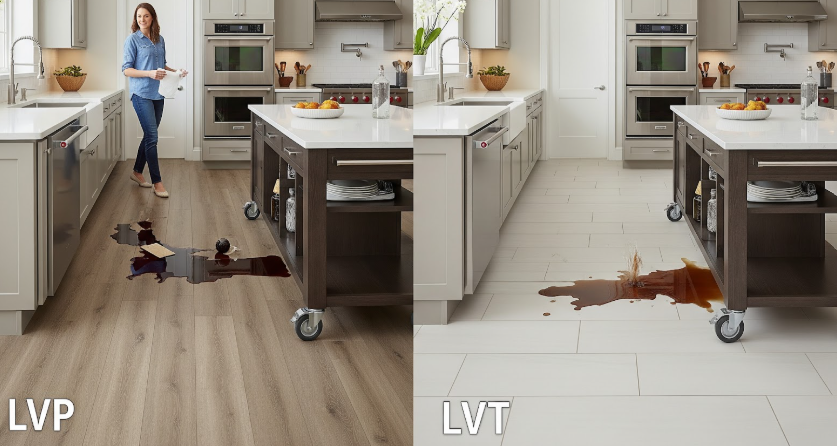
Why Buda Kitchens Demand High-Performance Luxury Vinyl Flooring
Kitchens in Buda work hard. Between family meals, weekend gatherings, and the constant movement of rolling islands and appliances, the floor deals with more wear than almost any other room. Add in everyday spills, pets running through the house, and Texas humidity fluctuations, and it becomes clear why so many homeowners are turning toward luxury vinyl options.
Luxury vinyl has become a go-to material for busy, design-focused households. It delivers the warmth and look of natural wood or stone without the maintenance headaches. At Texas Flooring Professionals, we regularly help Buda homeowners choose between LVP and LVT because both materials offer excellent durability—but each performs differently depending on how the space is used.
For kitchens with rolling islands, constant foot traffic, and frequent spills, choosing the right type of luxury vinyl flooring can make the difference between a floor that lasts and one that needs early replacement. Understanding how LVP and LVT compare helps you choose a surface that handles your lifestyle without compromising style.
Understanding the Difference Between LVP and LVT
Luxury vinyl flooring comes in two main formats:
Luxury Vinyl Plank (LVP)
LVP mimics hardwood planks with realistic wood textures and grain patterns. It’s often chosen for its warm, natural appearance and ability to visually extend into nearby rooms.
Luxury Vinyl Tile (LVT)
LVT replicates stone, ceramic, or patterned tile. It offers a crisp, clean aesthetic and works especially well in kitchens where homeowners want a more classic or contemporary tile look.
Both are durable, water-resistant, and designed for active households. But the way they respond to rolling islands, repeated movement, water exposure, and temperature shifts can influence which one is better for your home.
Water Resistance and Spill Protection: Which One Wins in Buda Kitchens?
Kitchens experience daily spills—coffee, water, juice, pet bowls, and the occasional cooking mishap. LVP and LVT are both built for water resistance, but their construction gives them slightly different strengths.
LVP: Excellent for Continuous Water Exposure
LVP’s plank format means fewer seams across the floor. Fewer seams = fewer opportunities for moisture to slip through. This makes it a strong choice for families who cook often, deal with messy toddlers, or have pets that love to knock over their bowls.
Benefits include:
• Plank structure limits the number of moisture entry points
• Works well in large kitchen layouts
• Easier to dry quickly without worrying about standing water
LVT: Strong Water Resistance with Superior Surface Protection
LVT handles spills perfectly fine, but its tile-style installation sometimes includes more joints. While still water-resistant, homeowners should wipe spills promptly to keep moisture from seeping through the micro-gaps.
Where LVT stands out is its protective wear layer:
• High-quality wear layers prevent staining
• Stone-look and patterned surfaces hide water marks well
• Great for kitchens where spills happen frequently but are cleaned quickly
For splash zones—near sinks, dishwashers, and refrigerators—either material holds up beautifully. The decision often comes down to how frequently water sits on the floor and how quickly you typically clean it.
If you prefer to explore options based on durability under spills and daily wear, you can browse luxury vinyl flooring styles that match your kitchen’s needs.
How LVP and LVT Handle Rolling Islands, Chairs, and Heavy Movement
Rolling kitchen islands are incredibly useful—but they can be tough on floors. Instant weight shifts, repeated rolling, and directional changes create friction that some flooring types struggle with.
LVP: Flexible and Forgiving Under Rolling Weight
LVP’s plank structure and layered core make it slightly more flexible than LVT. This flexibility gives it a bit more “give” when rolling heavy furniture or appliances.
Strengths include:
• Better resistance to denting from rolling islands
• Slightly softer feel underfoot
• Plank format distributes weight across a broader area
If your kitchen includes a large rolling island or you frequently rearrange furniture, LVP may handle the movement better over time.
LVT: Extremely Strong Surface Layer but Less Flexibility
LVT is dense and rigid, which makes it excellent for resisting scratches. Rolling islands glide smoothly over its surface. However, the hardness that protects the top layer means the tile may be slightly more vulnerable to denting under concentrated weight.
Benefits include:
• Outstanding scratch resistance
• Perfect for kitchens with metal chairs or barstools
• Tile-style designs resist surface wear beautifully
For rolling islands, LVP typically edges out LVT due to slightly more resilience, but both options perform well when paired with high-quality underlayment.
Aesthetic Differences That Matter in a Busy Kitchen
Kitchens are the heart of the home, and the look of your flooring sets the tone. Choosing between LVP and LVT often comes down to style—wood warmth vs. tile crispness.
Why Homeowners Choose LVP
• Seamless connection to adjoining rooms
• Wood-look patterns that feel warm and inviting
• Ideal for open-concept kitchens that blend into dining or living spaces
• Subtle plank texture hides dirt between cleanings
Why Homeowners Choose LVT
• Classic stone, slate, or ceramic looks
• More defined patterns for modern kitchens
• Clean, crisp feel that works beautifully with white cabinets or contemporary layouts
• Excellent for kitchens aiming for a timeless, sophisticated aesthetic
Both deliver stunning visuals—your kitchen’s design direction is the deciding factor.
Durability and Daily Wear: Which Luxury Vinyl Lasts Longer?
Daily life in Buda kitchens involves movement, mess, and moisture. Luxury vinyl flooring is designed to handle it all, but LVP and LVT have unique strengths.
LVP Durability Advantages
• Gracefully handles rolling furniture
• Slightly softer, more comfortable surface
• Great for homes with kids or pets
• Better for large, open layouts
LVT Durability Advantages
• Exceptional scratch resistance
• Stronger surface compression strength
• Ideal for kitchens with high foot traffic
• Clean, modern appearance holds up over time
Most homeowners can trust either option to last for years with proper maintenance. The best choice comes down to what kind of stress your floors face most often.
Maintenance and Cleaning: What’s Easier in a Real Kitchen?
One of the biggest benefits of luxury vinyl is how simple it is to care for.
Both LVP and LVT are:
• Easy to sweep and mop
• Resistant to staining
• Less likely to show wear compared to natural wood or tile
• Quick to repair or replace a single plank/tile if damaged
The main difference is texture. Wood-look LVP hides dust better, while the smoother surface of LVT can show smudges sooner—but cleans in seconds.
No matter which you choose, a luxury vinyl kitchen floor stays beautiful with very little effort.
Which Luxury Vinyl Performs Better Overall in Buda Kitchens?
Both LVP and LVT deliver long-lasting performance, but the best choice depends on your priorities.
Choose LVP if you:
• Have a rolling island
• Want a warmer, wood-look style
• Prefer fewer seams for moisture protection
• Need a slightly more forgiving surface
Choose LVT if you:
• Want a stone or tile aesthetic
• Prioritise scratch resistance
• Like a clean, modern kitchen look
• Prefer defined patterns and crisp edges
Buda homeowners often lean toward LVP for flexibility and spill resistance, but LVT remains a favourite for upscale kitchen design.
If you’d like expert help deciding which one fits your kitchen, reach out to us and our team will walk you through the best options for your space.


