

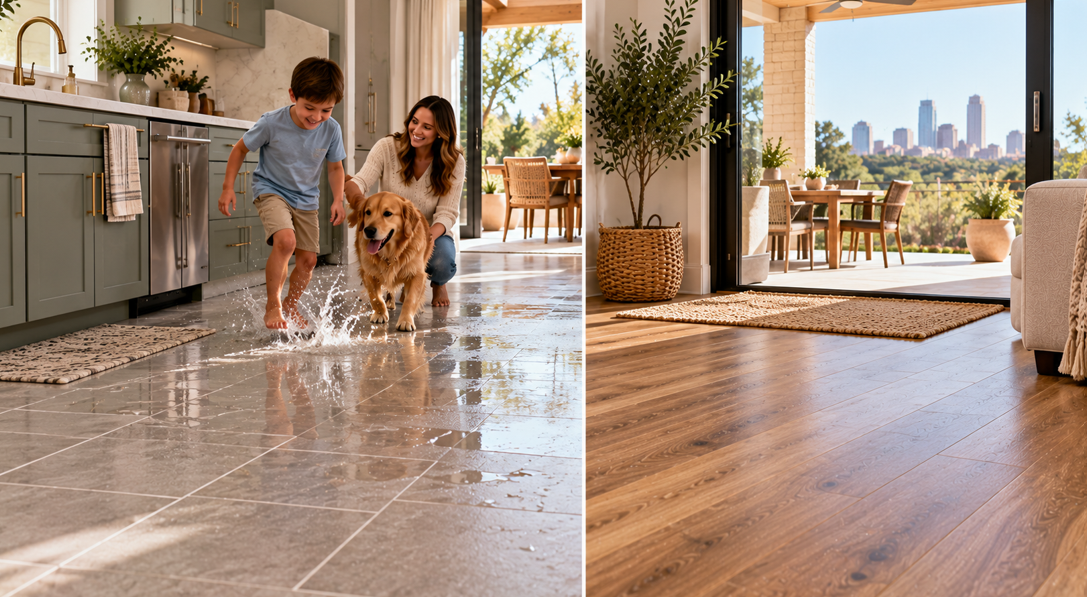
Shopping for new floors in Austin, you will see two phrases on almost every sample tag: waterproof and water-resistant. They sound alike, and many shoppers assume they mean the same thing. They do not. The difference can decide whether a kitchen leak becomes a quick wipe-up or a full floor replacement.
At Texas Flooring Professionals, we have helped Central Texas families choose floors for nearly 20 years. This guide explains what each label really means, which products fall into each group, and how to pick the right protection for every room in your home.
What Does "Waterproof" Actually Mean?
A waterproof floor is built so water cannot damage the core of the product. Spills, pet accidents and standing water from a dishwasher leak will not cause the planks to swell, warp or break down, as long as the water is cleaned up and the subfloor stays sound.
Common waterproof options include:
Luxury vinyl plank and tile with a rigid or flexible vinyl core
Porcelain and ceramic tile, which are naturally impervious to water
Waterproof laminate, a newer category with a sealed core and tight locking joints
Keep in mind that "waterproof" refers to the flooring itself. Water that seeps under the floor can still affect the subfloor, so proper installation and edge sealing in wet areas still matter.
What Does "Water-Resistant" Mean?
A water-resistant floor can handle surface moisture for a limited time. Wipe up a spilled glass of tea within a reasonable window and the floor will be fine. Leave a puddle overnight, though, and water can work into seams and edges, causing swelling or cupping.
Products often labeled water-resistant include:
Standard laminate with a protective top layer
Engineered hardwood with a sealed finish
Some solid hardwood with a quality topcoat
These floors offer beautiful looks and warmth, but they ask for a little more attention around sinks, tubs and entry doors.
Why the Difference Matters in Central Texas
Our region has a unique mix of weather. The Hill Country edge is known as Flash Flood Alley, and sudden storms can push water through doorways and garages with little warning. Then summer arrives with long stretches of extreme heat, when air conditioning runs nonstop and indoor humidity swings.
Many homes here also sit on slab foundations over expansive clay soils. Slabs can carry moisture up from below, especially in new construction. A floor that tolerates moisture from above and below gives you peace of mind through every season.
Matching Protection to Each Room
Not every room needs the same level of water protection. Here is a simple room-by-room approach:
Kitchens: Waterproof is the smart pick. Dishwasher leaks, sink splashes and dropped ice cubes are part of daily life.
Bathrooms and laundry rooms: Choose waterproof luxury vinyl or tile. These rooms see the most standing water.
Mudrooms and entryways: Waterproof floors handle wet boots, muddy paws and storm runoff.
Living rooms and bedrooms: Water-resistant laminate or hardwood can work well here, since spills are less frequent.
Basements and garage conversions: Waterproof options are the safest choice over concrete slabs.
If you want to see the full range of products built for wet areas, browse our waterproof flooring selection.
Pets, Kids and Everyday Life
Households with pets and young children benefit greatly from waterproof floors. Water bowls get tipped over, accidents happen, and kids track in water from the backyard sprinkler. Waterproof luxury vinyl and tile handle all of that with ease, and many products also offer strong scratch resistance.
Water-resistant floors can still work in pet homes, but they need quicker cleanup. If you have a busy household, it is worth weighing that extra attention against the look you want.
Common Myths About Waterproof Floors
A few misunderstandings come up often in our showroom:
"Waterproof floors never need care." They still benefit from regular sweeping and prompt cleanup, which keeps grit from dulling the surface.
"Water-resistant floors cannot go in kitchens." Many can, as long as spills are wiped up quickly and the product has tight, sealed joints.
"All vinyl is waterproof." Most modern luxury vinyl is, but always check the product specifications before you buy.
Does Waterproof Mean Compromising on Style?
Not at all. Today's waterproof floors come in a huge range of looks:
Wide-plank wood visuals with realistic grain and texture
Stone and concrete looks for modern spaces
Light, airy oak tones that keep rooms feeling cool in summer
Rich, dark finishes for a classic feel
Because we work with every major manufacturer, we can show you waterproof options that look every bit as beautiful as traditional hardwood.
Installation Makes a Big Difference
Even the best waterproof product depends on good installation. Our experienced team checks slab moisture, levels the subfloor and uses the right underlayment for your home. In wet rooms, we pay close attention to perimeter gaps, transitions and sealing around tubs and toilets.
We also offer transparent installation tracking, furniture moving during installation and free in-home estimates, so the process stays smooth from start to finish.
Quick Tips for Choosing
Before you decide, ask yourself:
Which rooms see regular water or spills?
Do you have pets or young children?
Is your home on a slab, and is it new construction?
How much time do you want to spend on cleanup?
Your answers will point you toward the right mix of waterproof and water-resistant floors.
Find the Right Floor for Your Austin Home
Waterproof and water-resistant floors both have a place, and the best choice depends on how you live. Our family-owned team is happy to walk you through samples, explain the differences in person and recommend the right fit for each room.
Book a visit to our showroom at 3827 Promontory Point Dr in Austin, ask about shop at home, or schedule a free estimate. Reach out to us at (512) 290-9425, and let's find a floor that keeps your home beautiful through every Texas storm.


